Earlier this week, Block, makers of Square, Cash App, Afterpay, etc., announced layoffs of 40% of their staff while leaning into AI programming. This isn’t a small company, mind you, so 4,000 folks will be looking for jobs in the coming days.
From the NY Times:
Block, the financial technology company that owns Square, Cash App, and Tidal, said on Thursday that it was cutting 40 percent of its workforce as it embraced new artificial intelligence tools.
About 4,000 employees are expected to lose their jobs, Jack Dorsey, the company’s top executive, said in a social media post.
we’re not making this decision because we’re in trouble. our business is strong. gross profit continues to grow, we continue to serve more and more customers, and profitability is improving. but something has changed. we’re already seeing that the intelligence tools we’re creating and using, paired with smaller and flatter teams, are enabling a new way of working which fundamentally changes what it means to build and run a company. and that’s accelerating rapidly.
CNN reporting included more thoughts from Dorsey:
“I think most companies are late. Within the next year, I believe the majority of companies will reach the same conclusion and make similar structural changes. I’d rather get there honestly and on our own terms than be forced into it reactively,” he wrote.
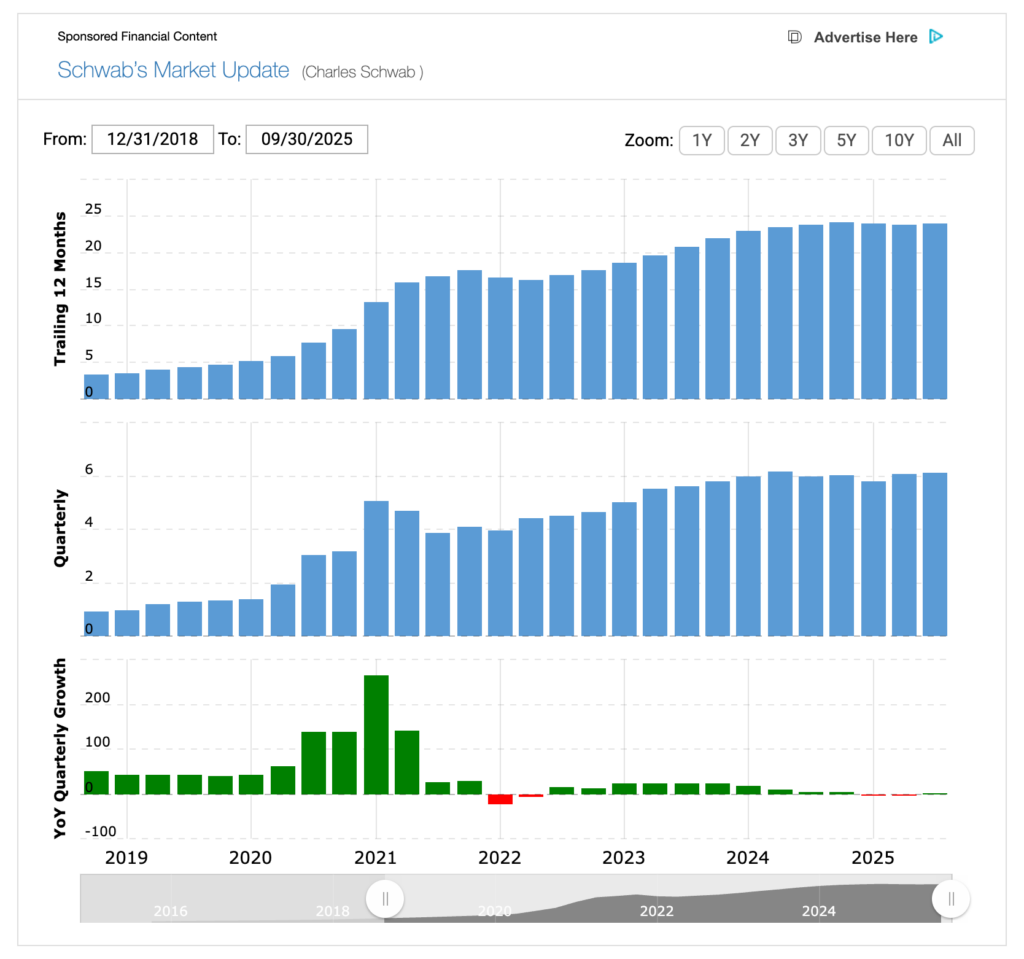
The reality is that Block grew way too fast in the post-pandemic era. By some reports, the company quadrupled employees in that term, a tremendous amount of growth while top-line revenue growth has stalled after the pandemic boom. Simply put, these layoffs help right-size the company.
But Jack Dorsey is a smart man and an innovative one. Aside from the aforementioned Block holdings, he founded Twitter (serving as CEO twice), helped to establish Bluesky, acquired Vine, and was interested in purchasing the publishing platform, Medium.
Vine presaged TikTok and its success hinged on a predictive algorithm and time to grow the platform, two things Twitter was unable to execute. This was a microcosm for Twitter, and as CEO, he never achieved consistent profitability (as opposed to Facebook). Twitter focused on product growth and thus staff growth, but it wasn’t sustainable as investors expected to make a profit. Dorsey left Twitter, replaced by other CEOs who likewise were unable to solve the revenue problems. And for Medium, I see it as the self-publishing precursor to Substack, although again, they never quite figured out the revenue component.
I imagine that Dorsey remembers these failures (perhaps that’s too strong of a word as he’s been wildly successful by any reasonable metric), and Musk’s takeover of Twitter and subsequent staff cuts are in the forefront of his mind. Musk bought Twitter, fired a high percentage of staff, and managed to keep the platform running. My supposition is that Dorsey wants to avoid a similar fate for Block.
But Dorsey isn’t alone among execs peering into their crystal balls regarding AI. This from the WSJ:
Companies are also more explicitly including the backlash to AI as a potential threat to their companies. The number of S&P 500 companies that included AI as a material risk in securities filings jumped to 72% last year from 12% in 2023, according to an analysis by the Conference Board and ESGAUGE.
So what do these layoffs at Block mean? I think it’s both a correction from overhiring AND a prediction about where the world is going. Dorsey has been on the leading edge many times before, and his track record of being in the arena and doing the work causes me to pause and consider it more deeply than if these cuts were made by private equity.
Is it the start of the trend of massive job losses, the doom loop, that Citrini Research speculated on earlier this week? I don’t go that far, but as more than 70% of S&P 500 companies list AI as a material risk, it’s not hard to imagine the conversations happening in board rooms today. For me, I suspect that many companies will consider a 25% – 50% cut of engineering teams as preparation for future growth in AI supported development. While this may seem like a business necessity, my preference remains growth over cuts, considering what good can be done instead of how much money can be made.
Leave a Reply